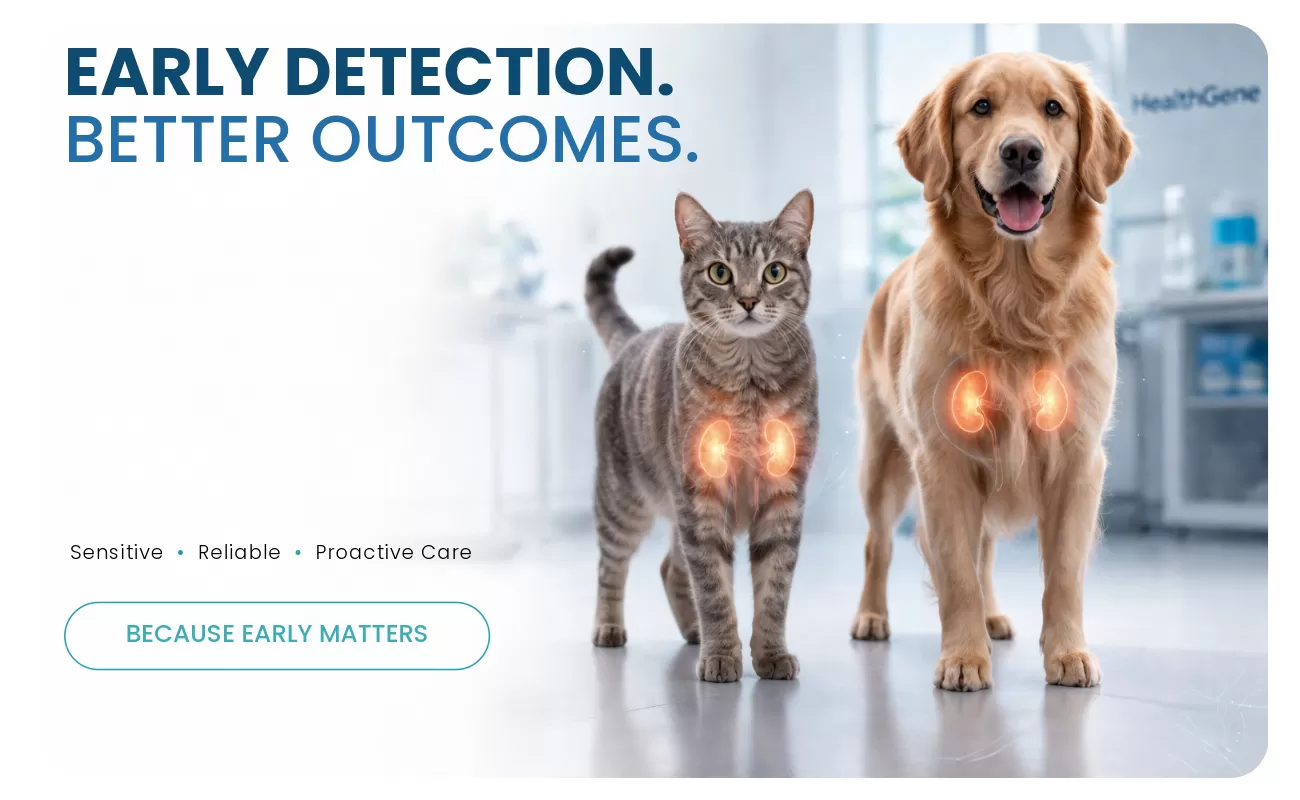
Kidney disease is often clinically silent in early stages,
especially in cats.
Traditional markers such as creatinine may not rise until
significant renal function is already lost.
This test is designed to:
✔ Detect early decline in kidney function
✔ Identify subclinical renal disease before creatinine elevation
✔ Support monitoring of chronic kidney disease (CKD) progression
✔ Improve clinical decision-making in at-risk patients
✔ Complement routine biochemistry panels
Symmetric Dimethylarginine (SDMA) is a sensitive biomarker of
kidney function that increases earlier than creatinine in cases of
declining glomerular filtration rate (GFR).
This ELISA-based assay supports earlier identification of renal impairment—
allowing for timely clinical intervention and improved patient management.
The SDMA ELISA test is recommended:
• As part of routine wellness screening (especially in senior pets)
• When early kidney disease is suspected
• In patients with normal creatinine but clinical concern
• For monitoring known or suspected CKD
• In breeds predisposed to renal disease
• Prior to anesthesia or long-term medication use
SDMA is less influenced by muscle mass compared to creatinine, making it particularly valuable in:
✔ Geriatric patients
✔ Cachectic or underweight animals
✔ Patients with borderline or inconclusive chemistry results
Supports:
✔ Earlier staging of kidney disease
✔ More accurate assessment of renal function
✔ Timely dietary and therapeutic intervention
